


Discuss the scope
Share the space, intended use, and finish direction.
 Discuss your project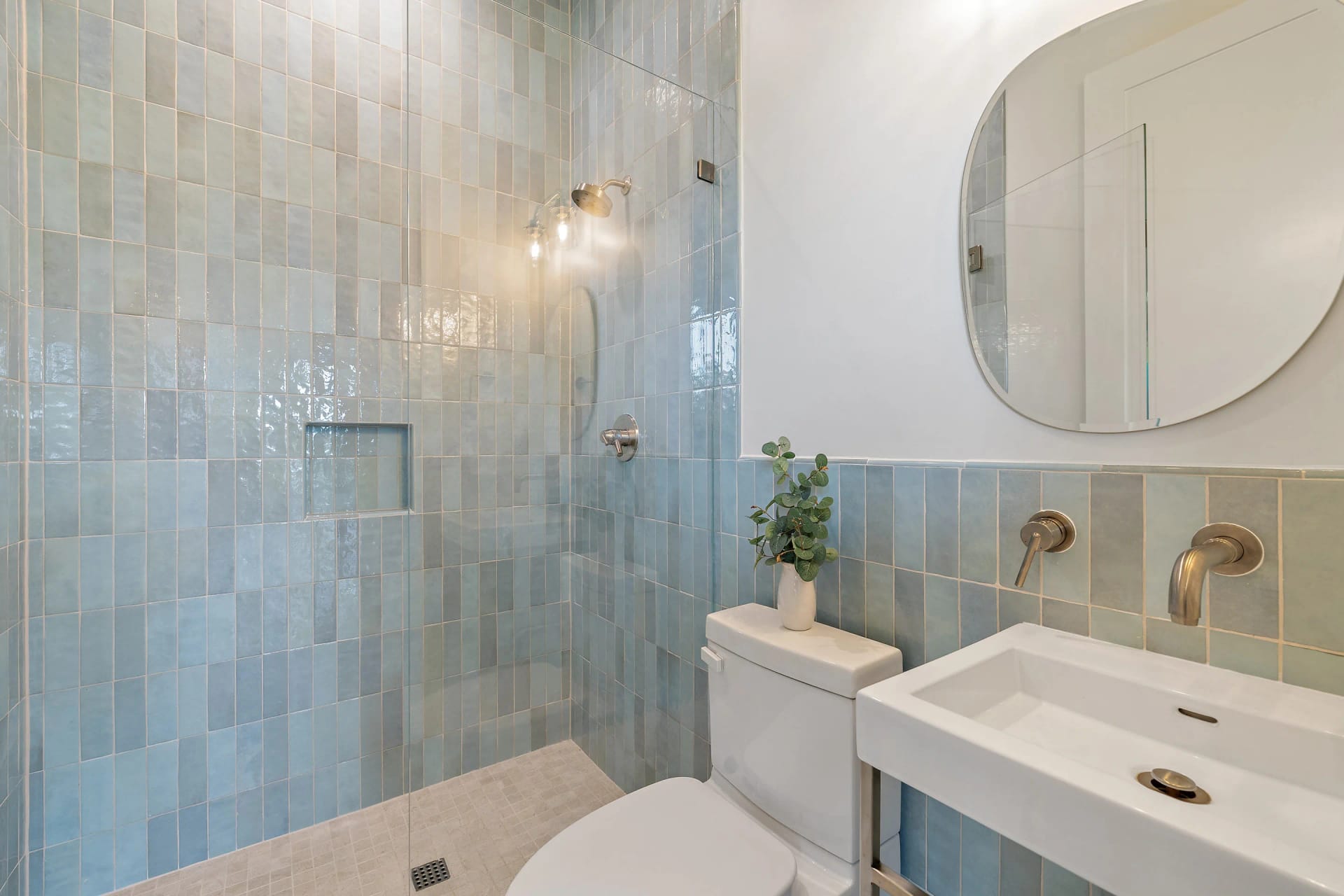
Porcelain, ceramic, and natural stone for floors and walls. Compare the material, format, and finish alongside the layout and the room it needs to serve.
Discuss your material selectionPhotography shows finish references. Confirm the selected product, dimensions, and specification for your project.
Identify floors, walls, wet areas, or exterior surfaces before narrowing the product selection.
Bring tile sizes, joint preferences, focal points, and transitions into the same conversation.
Review the selected product’s care requirements and the finish appropriate to its use.
Start with a material family. Then review the product and installation requirements for your space.
Sun Tile Corporation has installed tile floors throughout Austin and Central Texas since 1984 — ceramic, porcelain, and natural stone for kitchens, bathrooms, entryways, patios, and commercial spaces. Tile installation cost depends on tile type and pattern complexity. Family-owned since 1984, 75,000+ installations. Sun Tile provides a free, itemized in-home estimate: (737) 704-3000.
Last updated: August 22, 2026
Tile floor installation costs in Austin depend on the tile type, pattern complexity and the condition of the substrate. Sun Tile provides a free, itemized in-home estimate so you get an exact price for your project rather than a range.
| Feature | Ceramic | Porcelain | Natural Stone |
|---|---|---|---|
| Water absorption | Up to 7% | 0.5% or less | Varies — 0.4% (granite) to 7%+ (limestone) |
| Exterior exposure | Verify the product rating | Verify the product rating | Verify the stone and assembly |
| Best use | Walls, backsplashes, light floors | Confirm the intended use for each product | Luxury baths, foyers, patios |
| Maintenance | Follow the grout manufacturer’s care instructions | Follow the grout manufacturer’s care instructions | Confirm stone, grout, and sealer care requirements |
| Longevity (installed) | 15–25+ years | 20–30+ years | Decades with proper care |
Tile flooring has been the most requested material for Austin kitchens, bathrooms, and entryways for decades — and Sun Tile Corporation has been installing it since 1984. The three primary categories our Austin tile installers work with are ceramic, porcelain, and natural stone. Ceramic is manufactured from clay fired at lower temperatures, making it lighter and easier to cut — ideal for walls, backsplashes, and light-traffic interior floors. Porcelain is fired at higher temperatures from denser clay, producing a low-absorption tile body. Outdoor, wet-area, and commercial-floor uses still require the appropriate product rating and installation assembly. Natural stone — travertine, marble, slate, granite, quartzite — is quarried directly from the earth, giving each tile a one-of-a-kind character no manufactured product can replicate, at a higher cost and with more demanding maintenance requirements. Choosing the right tile for each zone of your Austin home is the first and most important decision our team helps you make during a free in-home estimate.
The right tile depends on where it's going, how much traffic it will see, and what role aesthetics and budget play. For Austin kitchen backsplashes and bathroom walls, ceramic tile delivers excellent style at the lowest installed cost — glazed surfaces resist staining and moisture, and the lighter material is easy to work with. For kitchen floors, master bath floors, and shower pans in an active household, porcelain's near-zero water absorption and higher PEI hardness rating make it the practical premium choice. For luxury master baths, entry foyers, wine cellars, and outdoor patios where the investment in a truly distinctive material is the point, natural stone is the standard in Austin's custom and semi-custom home market. Many Austin projects use all three: ceramic on the walls, porcelain on the floor, and a stone accent strip or mosaic insert to bring the space together.
Austin's building community — from the production builders developing Plum Creek and Steeplechase in Kyle to the custom home builders constructing Hill Country estates in Dripping Springs — has relied on tile flooring as a core specification for over 40 years. Tile handles Central Texas's climate extremes without warping or buckling. It stays cool underfoot during Austin's long, hot summers. It cleans easily in households with pets, children, and the kind of outdoor-indoor lifestyle Austin encourages. And it holds value: a well-installed porcelain or natural stone floor in an Austin kitchen or master bath consistently appears on buyer's inspection lists as a quality indicator. Sun Tile Corporation has been a flooring partner to Austin builders and homeowners since 1984, delivering the consistent quality and job-site coordination that both the production pace of master-planned communities and the custom detail of a one-of-a-kind estate require.
"Tile installation" in Austin covers far more than a kitchen floor, and the right answer changes with the application. Standard floor tile in kitchens, entries, and living areas is the highest-volume work we do. Wet areas — showers, tub surrounds, and step-free walk-ins — get waterproofed before a single tile is set, plus a different set of slope and drain details. Backsplashes, fireplace surrounds, accent and feature walls are vertical work with their own layout and support requirements. Outdoor patios and courtyards call for exterior-rated setting materials, a slip-resistant honed or brushed finish, and a sealer chosen for Austin's UV exposure. Large-format rectified porcelain, now the most-specified look in Austin, is its own discipline: it needs a substantially flatter slab and careful setting technique to control lippage and keep the surface flat and even. Sun Tile Corporation installs all of these, and most Austin projects combine several in one scope.
Bathroom tile installation in Austin covers three distinct pieces of work that get priced and built differently: the floor, the wall and wainscot tile, and the shower or tub surround. Floors are the most straightforward — porcelain in a 12×24 or larger format over a prepared, flat substrate. Wall tile and backsplash work is vertical, so layout matters more than square footage: full tiles at eye level, cuts pushed to the corners and the floor line, and every course held plumb against walls that are rarely perfectly straight in either a 1970s Austin ranch or a brand-new slab-on-grade build. Wet areas are the part that separates a bathroom from any other room in the house. Anything inside the shower or tub splash zone gets waterproofed over the substrate before a single tile is set, because tile and grout are water-resistant, not waterproof — what's behind them is what actually keeps water out of the framing. Central Texas adds one more consideration most guides skip: Austin's water is hard, and mineral deposits build up on grout and on unsealed natural stone far faster here than in soft-water regions. That is why sealing grout is a standard step in our bathroom installations, and we steer clients toward porcelain, or toward a denser stone like quartzite, when a shower is going to see daily use.
A properly built tile shower is assembled in a specific order, and every step is hidden by the one after it — which is why shower tile installation is the job where craftsmanship shows up years later rather than on the day the crew leaves. The substrate goes in first, then the pan, sloped so water leaves the shower instead of sitting in the corners. The pan and walls are waterproofed, and every seam, corner, and pipe penetration is sealed. Only then does tile go on — walls first, working down, so the floor tile can be cut tight to the finished wall line. Niches and benches are framed and waterproofed as part of that same envelope, never cut in afterward. Step-free, easy-access showers, increasingly requested in Austin primary-suite remodels and in aging-in-place work, need the slope built into the framing or the slab before any of this begins, which is why they have to be planned rather than added mid-job. Grout goes in last, and the shower stays dry through the cure before it is used. Sun Tile Corporation has been building showers this way in Austin since 1984 — step-free walk-ins, large-format porcelain walls, and natural stone — across more than 75,000 installations.
The same tile can be a completely different job depending on who it is for. Residential work in Austin runs on homeowner schedules, one room or one house at a time, with material selection and in-home estimating as a real part of the service. Builder work — production and custom — runs on the construction schedule instead: takeoffs from plans, coordination with the other trades, consistent crews across a community, and delivery on the superintendent's timeline. Commercial and multi-family work adds competitive line-item bidding, phasing around occupied space, after-hours and weekend installation, and a single accountable project manager from bid through punch list. If your project is an office build-out, retail space, restaurant, hotel, medical facility, or a multi-family community, our commercial team handles that scope directly rather than through residential estimating. Everything here — the same crews, the same 40-plus years of Central Texas experience, the same 75,000-plus installations behind them — just organized to fit how your project actually runs.
We install tile throughout the Austin metro. For local pricing, slab versus pier-and-beam preparation, and high-rise coordination, see tile installation in Austin, or pick your city:
Planning a full home renovation? See our Austin flooring installation cost guide for typical pricing across every material.
Bidding an office, retail, restaurant, medical, or multi-family project? Our commercial tile installation team handles competitive bidding, after-hours scheduling, and large-format specification directly.
Working with an architect or designer on a design-led scope — herringbone and chevron layouts, mosaic inlay, custom stone work, a high-end primary bath, or a step-free shower? See custom tile installation.
A material choice becomes a flooring scope when the layout, preparation, and installation details come together.
Share the space, intended use, and finish direction.
Compare the selected product and its requirements.
Identify preparation needs and adjoining finishes.
Discuss access, installation timing, and final details.
Tell us about your materials, approximate area, site conditions, and target timing. Our team can discuss the flooring scope with you.